Insights
Simon Squibb's YouTube Strategy: 1,723 Videos
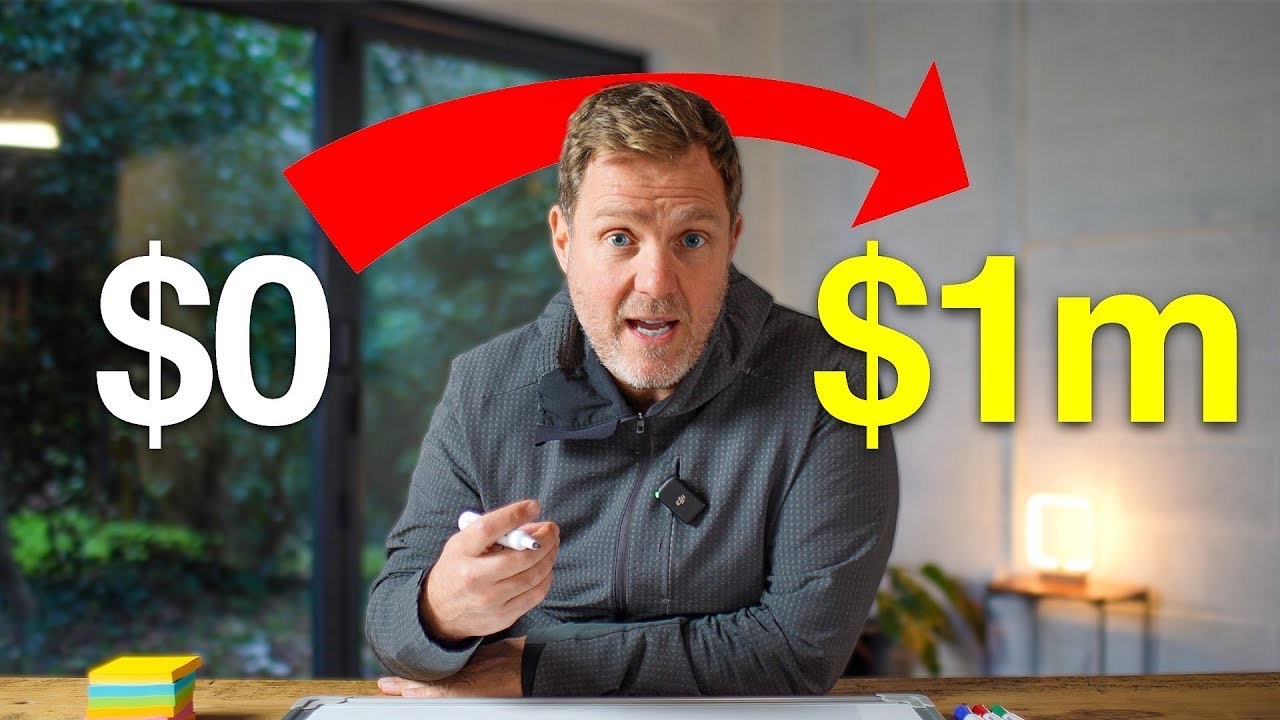
If you run a YouTube channel for a business, his channel is worth studying properly. His most watched upload is a 56 second Short with 43 million views. His most important is a 2 hour 26 minute business lecture, and 17.5 million people pressed play on it. This article breaks down how the two work together, which parts transfer to a channel like yours, and which parts would just buy you views that get nothing.
The channel has 2.42 million subscribers and 490 million lifetime views. In the last twelve months alone, tracked daily, it added 536 videos, 165 million views and 460,000 subscribers.
I ran the full public library - 1,723 videos - through the analysis tools I've coded and use for my clients, alongside a year of daily tracked channel history and video transcripts.
The formulas
Six formulas came out of the analysis. The evidence for each sits further down the article.
The takeout to try yourself: These are the formulas that show up in Simon Squibb's content. They are what his audience rewards on his channel, at his size, in his subject. Nothing here transfers automatically to yours, and the honest way to use any of it is as a hypothesis: pick one, have your channel manager run it against your own library, and keep it only if your numbers agree.
- The title formula: I + [action verb] + [named authority or dollar figure] + [time-boxed or money promise]. A named person in the title lifts the median 3.8x. A question mark cuts it to a third.
- The format ladder: value-stack titles ("30 Years of Business Knowledge in 2hrs 26mins") run a 600,967 median; plain how-to titles run 7,840. Packaging alone, 77x.
- The topic formula: attach the promise to a person or a moment. Named authority 3.8x, AI 2.3x. Generic money topics barely move it, and date-stamped topics decay.
- The Shorts formula: a stranger, a feeling, an emoji, under a minute. No keywords. 870 of his 1,409 Shorts follow it.
- The intro formula: open at the point of highest stakes, name what can be won or lost, then rewind to the beginning.
- The runtime formula: longer means more value here - videos over an hour get 5x the median of videos under ten minutes.
The takeout to try yourself: Screenshot this list. The rest of the article shows why each line earns its place.
Impressed by this insight?
Get deep insights just like this for your channel too.
Want to spot the patterns, trends and opportunities for your channel too? Click the button below, drop your channel URL and where to send it, and I'll fire it over within 48 hours.
The timeline nobody checks
The channel was registered in December 2011. Not a single video visible on it today predates March 2020 - the first eight years show nothing. Whether the channel sat quiet or older uploads were cleared out, the visible story starts with a business how-to video in the first month of lockdown: "Starting a Business With NO MONEY".
Then come two grind years most people never hear about. 66 uploads in 2020, 62 in 2021 - conventional business content to a small audience. The median long-form video across the whole library still sits at around 6,200 views, and those early years are a big part of why.
The Shorts phase starts in August 2022 - the date on the oldest Short still on the channel. After that the upload count climbs every year: 92 videos in 2022, 229 in 2023, 414 in 2024, 566 in 2025, and 294 by August 2026.
Split the library into eras and measure each one. The grind (March 2020 to June 2021): 121 long videos, median 555 views. The drift (July 2021 to July 2022): 16 uploads while the channel found its footing. The question era (August 2022 to December 2023): the street interviews begin - 261 Shorts at a 32,946 median alongside 47 longs at 28,841. The monster era (first half of 2024): 10 long videos running a 540,390 median, the 2h26m lecture among them. Industrial scale (July 2024 to today): 1,103 uploads - 987 Shorts at a 50,987 median, 90 longs at 122,227.
One comparison stands out. His first 69 Shorts ran a median of 29,796 views. The 121 long videos of the grind era ran 555. The new format found, inside five months, an audience roughly fifty times the size of the one two years of conventional long-form had built.
A 56-second street interview format found in year eleven did what eight invisible years and two grind years couldn't. Remember that before copying anything else he does.
The takeout to try yourself: If a format has had two years and hasn't found an audience, the fix is a format change, not a better version of the same video.
The machine
There are five moves.
Move one: own a question, not a niche. "What's your dream?" is the channel bio, the book title, and the doorbell he bolted to a staircase he bought in London. Formats get copied within weeks on YouTube; a question fused to one person's identity doesn't. Copy it and you look like the copy.
Move two: package emotion, deliver business. His Shorts titles sell feelings, not lessons - and the payload underneath is entrepreneurship.
Move three: volume sets the floor; spikes come free. Eight Shorts a week, every week, so the channel never depends on any one video - and roughly once a month, one detonates anyway.
Move four: hand the fame to long-form. Shorts can't carry a funnel, so the business runs through the roughly one long video a week.
Move five: never sell - and make the giving pay. The channel description promises "I will NEVER sell a course", and the monetisation runs through everything that promise makes possible.
The takeout to try yourself: The moves only compound together. Volume without a funnel builds fame that goes nowhere; a funnel without volume has nobody walking through it.
One question weaponised
Almost every Short is the same play: approach a stranger, ask the question, react to the answer. The staircase stunt is the same play at city scale - in his own words from the 2h26m video: "we put a doorbell at the bottom of that staircase and we said if you've got a dream press a button", and the stunt earned "millions of dollars worth of free PR for a staircase".
The brand equity is measurable from outside: around 12,100 people a month Google his name in the UK alone, and his free-help platform HelpBnk pulls around 1,600 UK searches a month on top (Google Ads data). The question became a media asset that keeps producing content, PR and deal flow at once.
The takeout to try yourself: Pick one question your buyers actually ask and own it everywhere - bio, openers, best content. Repetition is what makes it yours.
The packaging angle
Sort all 1,409 Shorts by views and read the top ten titles: "You're NEVER too young", "Angry customer loses it", "I Paid Off His Debt", "This Guy Quit His Job ON THE SPOT", "This broke my heart". Not one is a how-to. Every one is a stranger and a feeling, and nine of them sit above 11 million views - spread across five separate years, 2022 through 2026, which rules out one lucky moment.
Now read his long-form winners: "30 Years of Business Knowledge in 2hrs 26mins", "How To Set Up A Business In 47 Minutes", "$22,381 Worth of Marketing Advice in 63 Minutes". Value stacked on runtime, built for someone who wants the lesson.
Two packaging languages, two different jobs. The Shorts compete for feelings anyone on earth recognises, which is why they can do 43 million views. The long-form competes for people who want to start a business, which is why it can carry links, sponsors and a book. Most channels package both formats the same way and get neither result.
The same split shows up when you measure it rather than read it. Across both Hormozi libraries, putting a money figure in a Short's title was worth 1.75x and 1.64x, while the identical device in a long-form title earned nothing on either channel. A number buys the click at three seconds. It cannot hold a fifteen-minute promise.
The takeout to try yourself: Package feed content around a feeling and search content around a payoff. One channel can run both - never swap their jobs.
The peaks and the troughs
The cadence is relentless: 50 Shorts in the 44 days before this analysis - eight a week - plus a long video most weeks. That volume buys a floor: the channel added an average of 454,000 views a day, every day, for a year.
Then there are the spikes. January 2026 added 25.8 million views - nearly five times December - and 70,000 subscribers, his biggest month of the tracked year. No single video explains it alone; a cluster of Shorts published that month ran to 13.5 million, 5.2 million and 3.5 million views, while a long-form AI video added 1.8 million.
He doesn't need any single video to go viral. He publishes so often that the channel grows without one - and roughly once a month, one goes viral anyway.
The takeout to try yourself: Set a publishing floor you can hold for a year and stop judging single videos. The spikes are a byproduct of the floor.
7% of the uploads lead to the clickable funnel
Here's the split the dashboard never shows you. Of the trailing year's uploads, 458 were Shorts and around 35 were long videos - yet the business runs almost entirely through the long ones, and the description data proves it.
Across the full library, the median long-form description carries four links: the book, HelpBnk, sponsor and affiliate links, chapters. Four in five Shorts descriptions carry no link at all - and YouTube wouldn't make them clickable anyway. That's a platform rule, not a Squibb decision: no channel can run a funnel through Shorts descriptions.
Which makes the design honest and repeatable: Shorts buy the fame, long-form cashes it. If your channel is all Shorts, the attention has nowhere to go - on any channel, run by anyone.
The takeout to try yourself: Check your own split today. If most of your uploads are Shorts, your funnel has almost nowhere to live.
The template that keeps travelling
"30 Years of Business Knowledge in 2hrs 26mins" went up in March 2024 and has 17.5 million views - 3.6% of the channel's lifetime views in a single upload. It's the second most watched thing on the channel, beaten only by the 43M Short, and it out-views every other long video by more than tenfold.
He reran his own formula four times - "How To Set Up A Business In 47 Minutes" (962,000), "30 Years Of Marketing Knowledge In 53 Minutes" (649,000), "$22,381 Worth of Marketing Advice in 63 Minutes" (601,000), "How To Go From $0 To $100M In 55 Minutes" (509,000). Strong numbers, and none within touching distance of the monster. A compressed-experience title is a proven format; which topic detonates stays stubbornly hard to schedule. The answer his channel gives is the same as move three: keep running the play, and one landing is enough - the monster still compounds daily, two and a half years on.
Readers of Teardown #1 will recognise the architecture: Daniel Priestley's relaunch lead with "25 Years of Sales Knowledge in 34 Minutes". Squibb's version predates his by seventeen months. The template travels between channels - and on both channels, topic choice set the ceiling, not the formula.
The takeout to try yourself: When a title architecture works once, rerun it. The reruns won't all detonate - they don't need to.
Every long-form format, counted
Group all 284 long videos by their title pattern and take the median of each group. The ladder is steep:
Five value-stack titles run a 600,967 median. Seventy-four plain how-to titles run 7,840. Same presenter, same subject matter - a 77x gap decided at the packaging layer. (The remaining 149 longs sit outside any repeated pattern and run a 3,186 median, most of them from the grind era.)
The Shorts ladder is flatter: 870 of the 1,409 Shorts are the emotional street-encounter format - an emoji in the title is the reliable marker - and they run a 50,226 median against 42,390 for everything else. His Shorts mostly share one format; the big performance differences live in long-form.
The takeout to try yourself: Rank your own last 20 titles on a ladder like this and count how many sit in your weakest format. That count is usually the cheapest fix available.
The title formula
Take the 134 long videos of the machine era (2023 onwards) and split them by what the title contains. Median views with each element, against the median without it:
- A named person or brand (MrBeast, Branson, Hormozi, Nike): 317,648 against 83,618 - a 3.8x lift, the biggest of any element.
- AI as the topic: 2.3x.
- A time promise ("in 47 minutes", "2hrs 26mins"): 2.1x.
- First person ("I Asked", "I Tried"): 1.9x.
- "You" or "your": 1.6x.
- A dollar figure: 1.5x.
- A question mark: a third of the median of statement titles. His titles assert; the questions underperform.
- A bare number with none of the above: no lift at all.
One channel's data, so treat the multipliers as directional rather than laws. But stacked, they give a formula his own best titles already follow: I + [action verb] + [named authority or dollar figure] + [time-boxed or money promise]. "I Asked A Billionaire How To Make Money (In 10 Steps)". "I Tried 500+ AI Tools, These 9 Will Make You Rich". "Give Me 39 Minutes And I'll Make You Dangerously Confident".
Runtime belongs in the formula too: his longs over an hour run a 219,850 median; under ten minutes, 44,026. On this channel, length is value.
The takeout to try yourself: Rewrite your next title with the formula before you film: a named authority, a dollar figure, a time-boxed promise. Make it a statement, not a question.
What three transcripts reveal
I read three transcripts in full: the best long video, the latest, and the weakest of the machine era.
The best - the 2h26m lecture, 17.5 million views - opens by giving: "I don't want to charge people for help I want to give you the knowledge for free". Then it dares you to stay: "if you can't stay on this video for 5 minutes without clicking on off I've got some news for you". Then a menu of every chapter ahead. Give, challenge, map - all inside the first two minutes.
The latest - "I Dared A Struggling Rapper To Perform For 5,000 People" - is built like a MrBeast video. It opens at the climax: "This unknown rapper is about to perform in front of 5,000 people... and he's terrified." It names the stakes: "if this performance goes badly, he might never believe he's good enough to perform again." Then it rewinds nine months and escalates challenge by challenge back to the stage. The sponsor read is woven in as a step in the story - building the rapper's merch site - and his own drink brand appears as a prop on performance night, "with 10% of the profits helping others pursue their dreams".
The weakest - "How To Become A Millionaire In The Recession 2023", 3,978 views - is competent. It opens on news clips, promises four reasons and three steps, and delivers them, with his own coaster-advertising and billboard stories inside. What it lacks is everything the other two have: no person to follow, no stakes, no named authority in the title, and a topic with a date stamped on it. The format ladder above prices that combination at the bottom.
The intro formula the winners share: open at the point of highest stakes or biggest promise, name what can be won or lost, then rewind to the beginning. The weak one opens by setting the scene. The strong ones open with what's at stake.
The takeout to try yourself: Move your best moment into the first fifteen seconds and say what's at stake. The scene-setting can wait until the viewer has a reason to care.
"I will NEVER sell a course" - and that is the sale
Minute one of the 2h26m lecture: "I don't want to charge people for help I want to give you the knowledge for free". The channel description makes it a standing promise.
What outside data can see is how the generosity pays. The descriptions carry his book, sponsor reads and affiliate codes. HelpBnk - his own platform - is linked from nearly every long video. A MrBeast collaboration video routes viewers to a page collecting a thousand dreams. Each of those is a revenue line or an asset that compounds his reach.
What outside data can't see, so I label it as my hypothesis: the biggest return is deal flow. He invests in and takes equity positions around businesses, and a channel where strangers pitch their dreams on camera is an enormous public funnel of investable founders. The free help isn't the opposite of a business model. On this reading, it is the business model.
His own words, from the marketing chapter of the same lecture, explain why the whole structure works: "if you've got a million views but the wrong views it's wasted". Entertainment views and buyer views look identical in a dashboard - and behave completely differently. He engineered a machine where the entertainment views build fame, and a separate format harvests the buyers.
The takeout to try yourself: Giving away your best knowledge builds more trust than gating it - but decide first what the giving is supposed to feed.
The business model, layer by layer
"I will NEVER sell a course" sits in the channel description. So what pays for 1,700 videos? The layers you can see from outside:
- Sponsorship. [email protected] in the channel description, and branded reads inside the videos - a domain registrar gets a story-integrated read in the latest long, a creator storefront sponsors the DJ video.
- Affiliates. Referral-coded links (via=simonsquibb) on the AI tools he features.
- The book. "What's Your Dream?" linked from nearly every long description.
- His own products, placed as props. DreamBrew appears inside the rapper video; a merch store gets built on camera as part of the story.
- HelpBnk and the newsletter. The free platform is linked everywhere, and it pulls around 1,600 UK Google searches a month of its own.
Those are the visible revenue lines. The bigger machine is the one his own bio points at: founder of Dream Inc, investor "in over 80 startups" (his words). A channel where thousands of founders pitch their dreams on camera is deal flow most investors never see - and the staircase story shows what he pays with: press the doorbell and "we'll then upload your dream to our 4 million following and get you free exposure". Exposure is the currency. The equity upside is the return I can't see from outside, so it stays labelled a hypothesis - but every layer above points the same way.
Which is how the channel fits the wider business. The Shorts manufacture fame. The long-form carries the sponsor, affiliate and book economics. The giving manufactures deal flow for Dream Inc and users for HelpBnk. And the never-sell-a-course promise is what keeps all of it credible: the moment he charged for help, the strangers stop pressing the doorbell.
Worth saying plainly for anyone tempted to copy it: most business channels run the opposite model - the channel exists to sell a service, and that's correct at normal scale. His model only pays because the attention is planetary. Below that scale, a channel that sends buyers to an offer beats a channel that monetises its surroundings.
The takeout to try yourself: Unless your attention is planetary, run the boring model: point the channel at one offer and measure enquiries, not views.
The outliers pass the authenticity check
Numbers this size invite one fair question: were they bought? The engagement maths says no. Bought traffic leaves a signature - thin like rates and dead comment sections. His five biggest Shorts run like rates between 2.7% and 6%, with comments in the thousands, and the daily tracked history shows subscribers rising alongside views all year rather than the views-up, subscribers-flat pattern paid campaigns leave behind. The attention is real.
The takeout to try yourself: Run this check on any channel before you copy it: like rate around 2% or better, comments in proportion to views. If the engagement is thin, the playbook may be bought.
What a business channel takes from this
Copying Simon Squibb is tempting, so the transferable lessons need care:
- His machine fits his buyer - check whether it fits yours. Squibb's audience is anyone with a dream, so planetary-scale emotional Shorts reach his actual market. If you sell to a narrow B2B audience, the same Shorts strategy buys entertainment views that build zero pipeline. Teardown #1's Daniel Priestley runs the mirror-image machine - long-form first, Shorts demoted - and it works for exactly the same reason: the format points at who the channel is for.
- Own a question or a format, not just a topic. Topics are contested; an identity-fused format compounds and resists copying.
- Package for the surface. Feed content sells a feeling; search-and-browse content sells a stacked payoff. One channel can run both languages - his does - but never interchangeably.
- Put the funnel where the platform allows it. Links live in long-form descriptions. A Shorts-only channel has nowhere to send a buyer.
- Volume before virality. The floor comes from cadence; the spikes are a byproduct. Build for the floor.
- Generosity scales when it's structural. His giving produces content, PR, sponsorship inventory and deal flow at once. A giveaway with no structure underneath just costs money.
Reading a channel this way - which format is doing which job, which views could ever become buyers, where the next lever is - is a core part of YouTube channel management. The same analysis that produced this piece runs on client channels every month.
The takeout to try yourself: Pick one of the six formulas and apply it to your next upload. The title formula is the fastest to test.
How this analysis was done
Everything above comes from public data: a full export of the channel's public library (1,723 public videos as of 11 August 2026; the channel's public counter reads 1,765, the difference being recent uploads and live replays absent from the export), daily tracked subscriber, view and video counts across twelve months, video descriptions and link counts, live search volumes, and full transcripts of three long videos: the best performer, the latest upload, and the weakest of the machine era. Quotes are verbatim from caption tracks. Every figure was re-derived in code and cross-checked against a second source before publication.
Key verified numbers: subscribers 1,960,000 on 11 August 2025 and 2,420,000 on 11 August 2026 (tracked daily); 165,717,623 views gained in that window; top Short 43,345,948 views; the 2h26m video at 17,502,532 views, 3.6% of lifetime views; nine Shorts at or above 11 million views published across 2022-2026; median of four description links on long-form videos against 82% of Shorts carrying none. Era and format tables: 121 grind-era longs at a 555 median; first 69 Shorts at 29,796; five value-stack titles at 600,967 against 74 how-to titles at 7,840; title-element lifts computed on the 134 longs published 2023 onwards.
What outside data can't show: retention curves, traffic sources, revenue, equity terms, or what any view converts to. Claims that depend on those are labelled as hypotheses above.
Analysis and write-up: Stewart Read.

Meet Stewart
Stewart Read
Fractional YouTube Growth Strategist
I've run YouTube channel management for 8-figure businesses, turning channels into reliable sources of leads, clients and measurable revenue rather than views alone.
Using a class-leading suite of channel analysis tools he built himself, he pinpoints exactly what makes your audience click, watch, and convert - then turns those findings into videos that bring buyers to your business.
Channel Intelligence
The monthly service behind this analysis. A written briefing on what your channel returned to the business, a video walkthrough of the findings I record myself, and a plan for the videos to make next.
See how Channel Intelligence works